01 — DIGITAL IMPLANTOLOGY
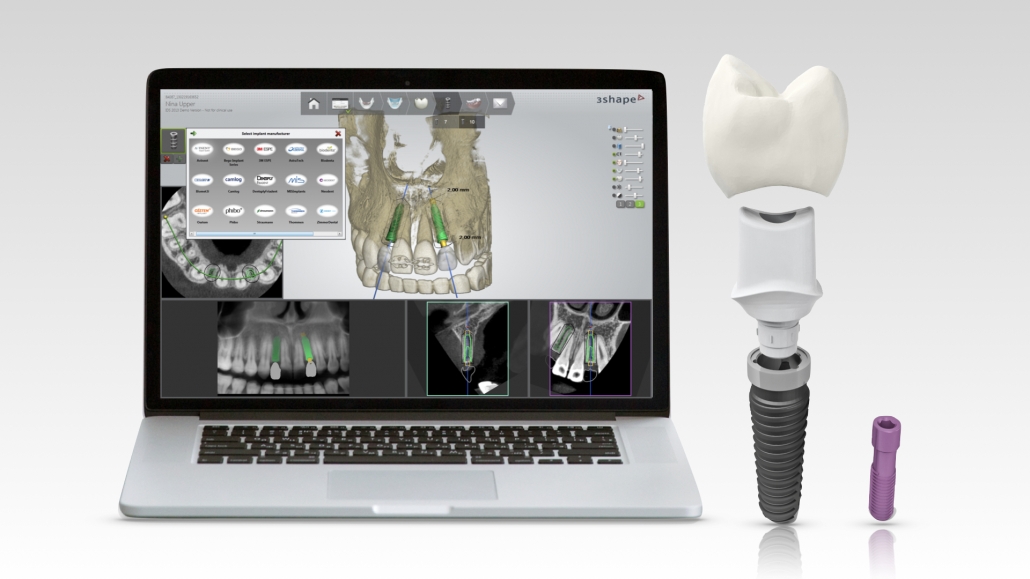
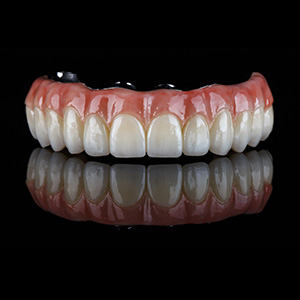
The intended restoration defines the starting point for digital implant planning. This process, known as Backward Planning, evaluates tooth position, restorative space, implant position, and implant axis in relation to the planned prosthetic reconstruction.
Digital planning and CAD-based design provide the technical basis for developing individual implant components and implant-supported restorations.
02 — DIGITAL PLANNING
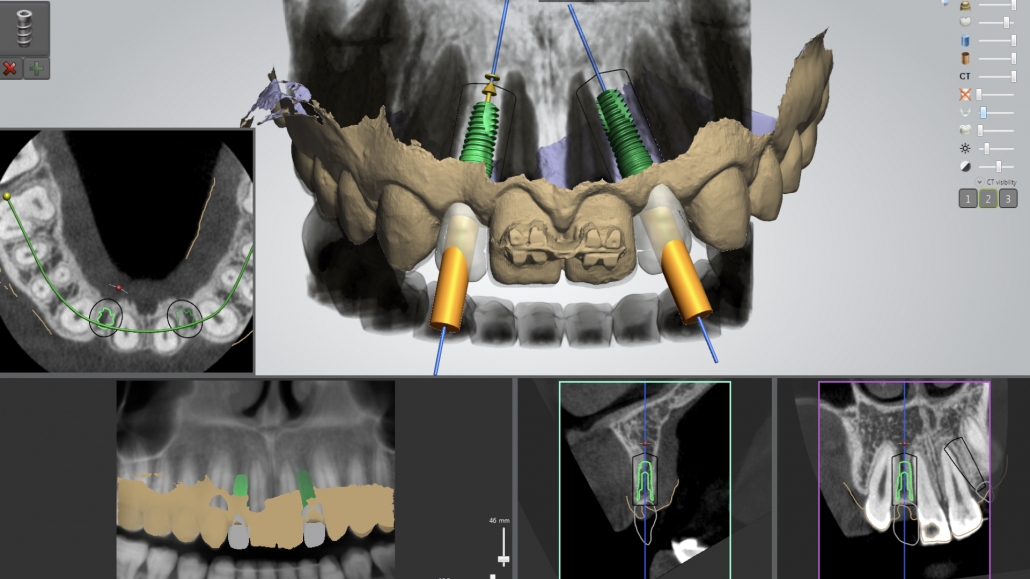
Digital implant planning combines available surface scans, virtual tooth arrangements, and implant-related information within a common digital environment.
Where available, radiographic and anatomical data can be incorporated as supplementary information to establish the spatial relationship between the intended restoration and the existing implant conditions.
The resulting digital model provides a reference for evaluating restorative space, component geometry, and the technical feasibility of the planned prosthetic design.
03 — CUSTOM ABUTMENTS
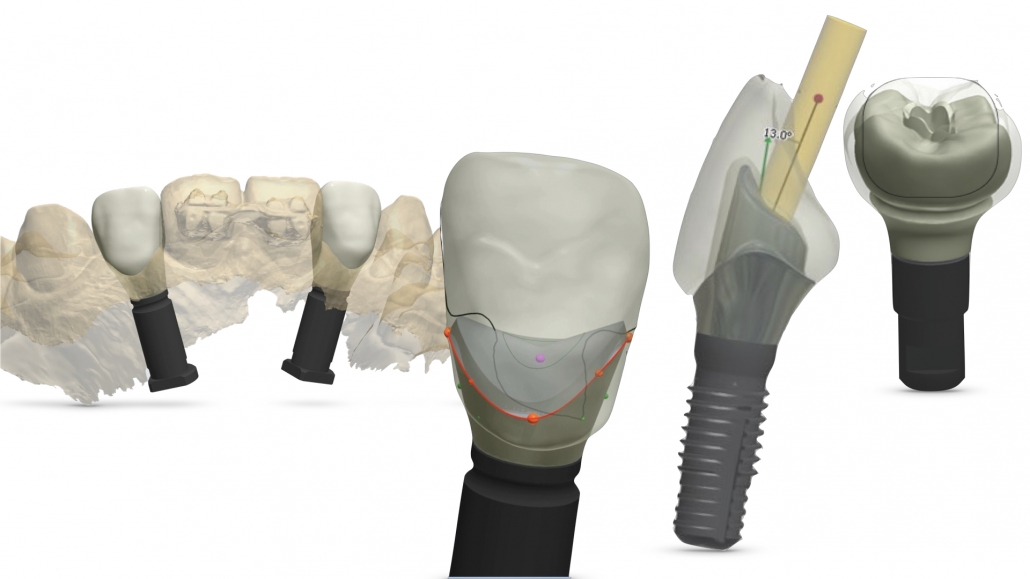
Individual abutments are designed according to the implant connection, implant axis, available restorative space, and the intended restoration.
The CAD design defines the emergence profile, abutment height, axial wall geometry, and restorative margins within the technical limitations of the selected implant system.
Depending on the restorative requirements, individual abutments can be developed using titanium bases or other compatible implant components. Material selection and component design are determined by the prosthetic indication and the specifications of the implant system.